
Structural Support That Starts Below Grade
Concrete foundation installation for new construction and additions in Dubuque.
Your foundation carries the entire weight of your home and must be installed correctly to prevent settling, cracking, or moisture intrusion. In Dubuque, where frost depth reaches below 42 inches and soil conditions vary across properties, proper excavation and forming are critical to long-term stability. Full-Bohr Concrete Construction installs concrete foundations for new residential construction, home additions, garages, and detached structures.
The work begins with excavation and grading to prepare the site and ensure that the foundation meets local building standards. Forms are set to define the walls, and reinforcement is placed to handle structural loads and resist cracking. The concrete is poured in stages, with footings installed first to distribute weight evenly across the soil. Attention is given to moisture control, drainage, and coordination with other trades to keep the project moving without delays. The result is a foundation that supports your structure and performs reliably through seasonal ground movement.
If you are planning new construction or an addition in Dubuque, contact Full-Bohr Concrete Construction to review your building plans and schedule foundation installation.
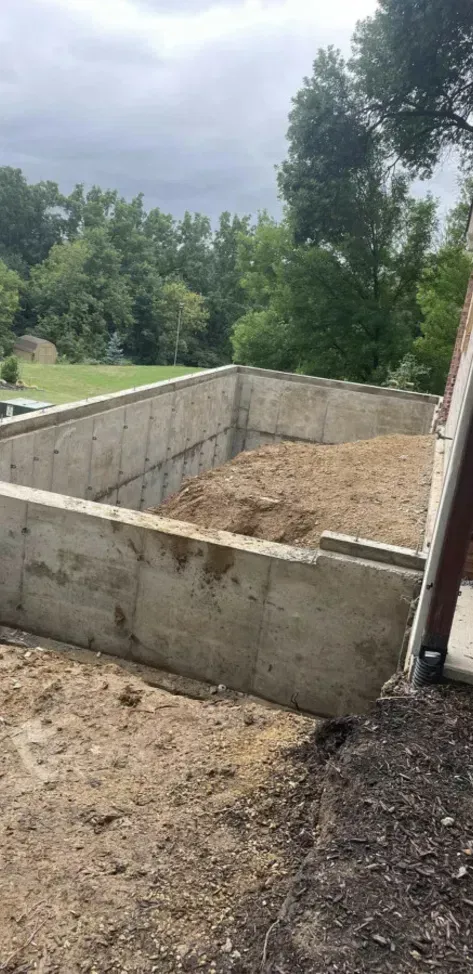
How Footings and Walls Are Formed and Poured
The crew excavates the site to the required depth and places compacted gravel at the bottom to create a stable base. In Dubuque, footings must be poured below the frost line to prevent heaving and cracking caused by freezing ground. Forms are set for the footings first, then for the foundation walls, and reinforcement is tied in place before any concrete is poured.
Once the concrete cures, you will have a solid foundation wall that is level, properly reinforced, and ready to support the weight of your home or addition. The footings distribute the load across the soil, and the walls are built to resist lateral pressure from backfill and water. Proper curing time is critical, and the forms are left in place until the concrete reaches sufficient strength.
The crew also coordinates with excavation contractors and inspectors to ensure that the work meets code requirements and that drainage systems are installed before backfilling. This work does not include waterproofing or insulation, but it does provide the structural base that those systems rely on. The foundation is built to meet the frost-depth and load-bearing requirements that apply to residential construction throughout the area.
Questions builders and homeowners ask during planning
Builders and homeowners planning foundation work often want to know about frost depth, curing time, drainage requirements, and how to coordinate the pour with other stages of construction.
Full-Bohr Concrete Construction works with builders and homeowners in Dubuque to install concrete foundations that meet structural and code requirements for residential construction and additions. If you need a foundation poured for a new build, garage, or addition, get in touch to review your plans and coordinate the schedule.
