
Grade Changes Managed With Structural Support
Concrete retaining walls installed to prevent erosion and improve yard layout in Dubuque.
Your property may have steep slopes or uneven terrain that makes it difficult to use your yard safely or maintain landscaping without erosion. In Dubuque, where sloped lots are common near the bluffs and hillsides, a retaining wall provides structural support that holds soil in place and creates usable, level areas. Full-Bohr Concrete Construction installs concrete retaining walls designed to manage grade changes and resist the pressure that builds up behind the wall over time.
The work includes planning the wall height, placement, and drainage to prevent water from building up behind the structure and causing cracks or shifting. You work with the crew to determine where the wall will go and how it will integrate with your existing hardscape, such as driveways, patios, or walkways. The concrete is reinforced to handle the lateral load from soil and water, and drainage systems are installed to relieve hydrostatic pressure. The result is a stable wall that prevents erosion and improves the layout and function of your property.
If your property in Dubuque has slopes that need structural support, contact Full-Bohr Concrete Construction to review the site and discuss retaining wall options.
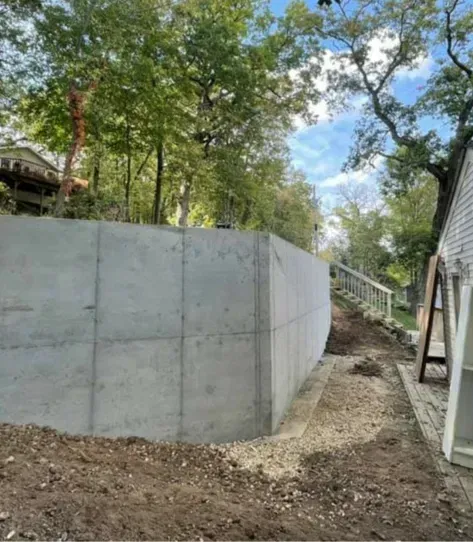
How Walls Are Built to Resist Soil Pressure
The crew begins by excavating the slope and preparing a compacted gravel base at the bottom of the wall. In Dubuque, where freeze-thaw cycles can shift soil and create pressure, proper drainage is critical to preventing wall failure. Forms are set and reinforcement is placed before the concrete is poured, and drainage pipe is installed along the back of the wall to channel water away.
Once the wall is complete, you will see a solid structure that holds the soil in place and creates a level area above or below the wall. The slope no longer erodes during heavy rain, and you gain usable yard space that can be landscaped or used for seating, gardens, or pathways. The wall is designed to handle the lateral load from the soil and the additional pressure that water creates when it saturates the ground.
The crew also integrates the wall with other site features, such as driveways or patios, to create smooth transitions and consistent drainage across your property. This work does not include decorative finishes or landscaping, but it does provide the structural support needed to prevent erosion and manage grade changes. The wall is built to perform under the soil and weather conditions that affect sloped properties throughout the region.
What property owners want to know before building
Property owners planning a retaining wall often ask about wall height, drainage requirements, how long the wall will last, and whether permits are needed for the project.
Full-Bohr Concrete Construction works with property owners in Dubuque to design and install concrete retaining walls that prevent erosion and create functional yard space on sloped lots. If you need a retaining wall to manage grade changes or improve your property layout, reach out to schedule a site review and discuss your options.
